Week 1
Doc became a site.
The lesson was packaging. A stranger should be able to land cold and know what to do next.
A bilingual real estate OS that keeps language, owner, risk, and recovery path together when a buyer gets anxious, a lender slips, or an HOA detail has to go back to research.
Test the Stalled Deal →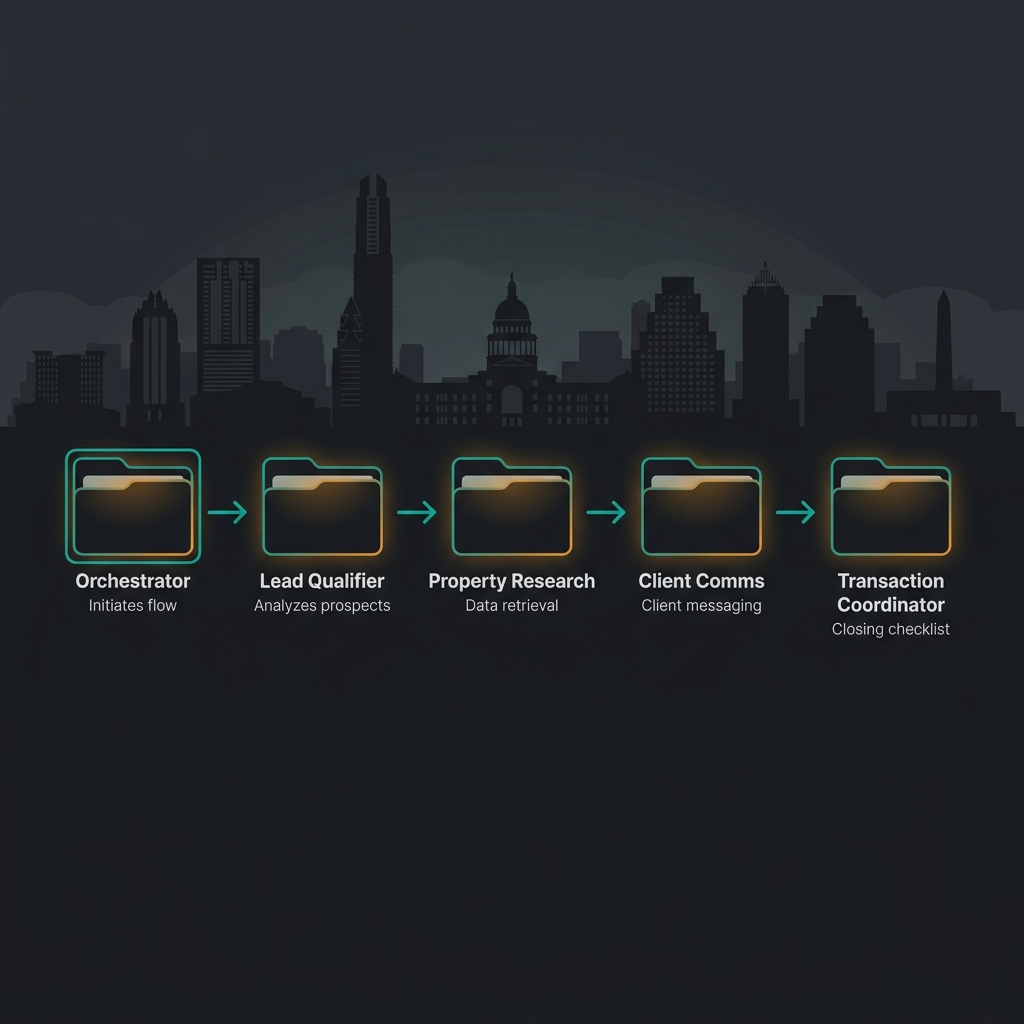
The Team
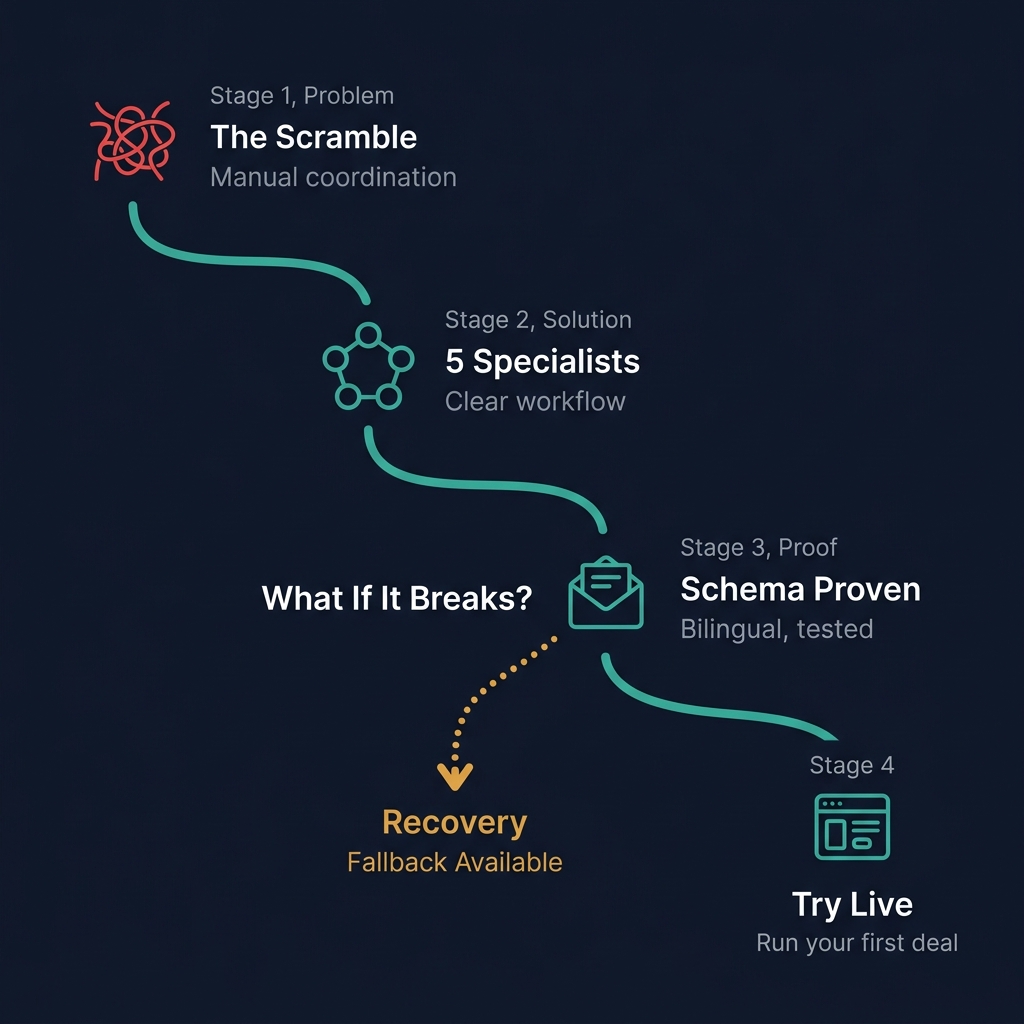
Each folder handles one job. Open it in Claude, describe your situation, and the specialist returns a structured handoff the next folder can trust. No training. No logins. No guessing who owns the next move.
Routes every request. Assigns case IDs. Detects language preference at intake. Never does the work; it protects ownership so nothing drifts.
First human touchpoint. Captures budget, timeline, language, motivation, and readiness. Separates real buyers from polite browsers.
The analyst. Comps, days on market, price per sqft, school fit, commute context, and neighborhood risk for buyer or listing decisions.
Writes in Diana's voice. Matches tone to deal stage. Drafts in English or Spanish from the same source facts, never as an afterthought.
Tracks every deadline, document, and open item. Flags anything inside the danger window. Only this folder moves a file toward close.
The Design Decision
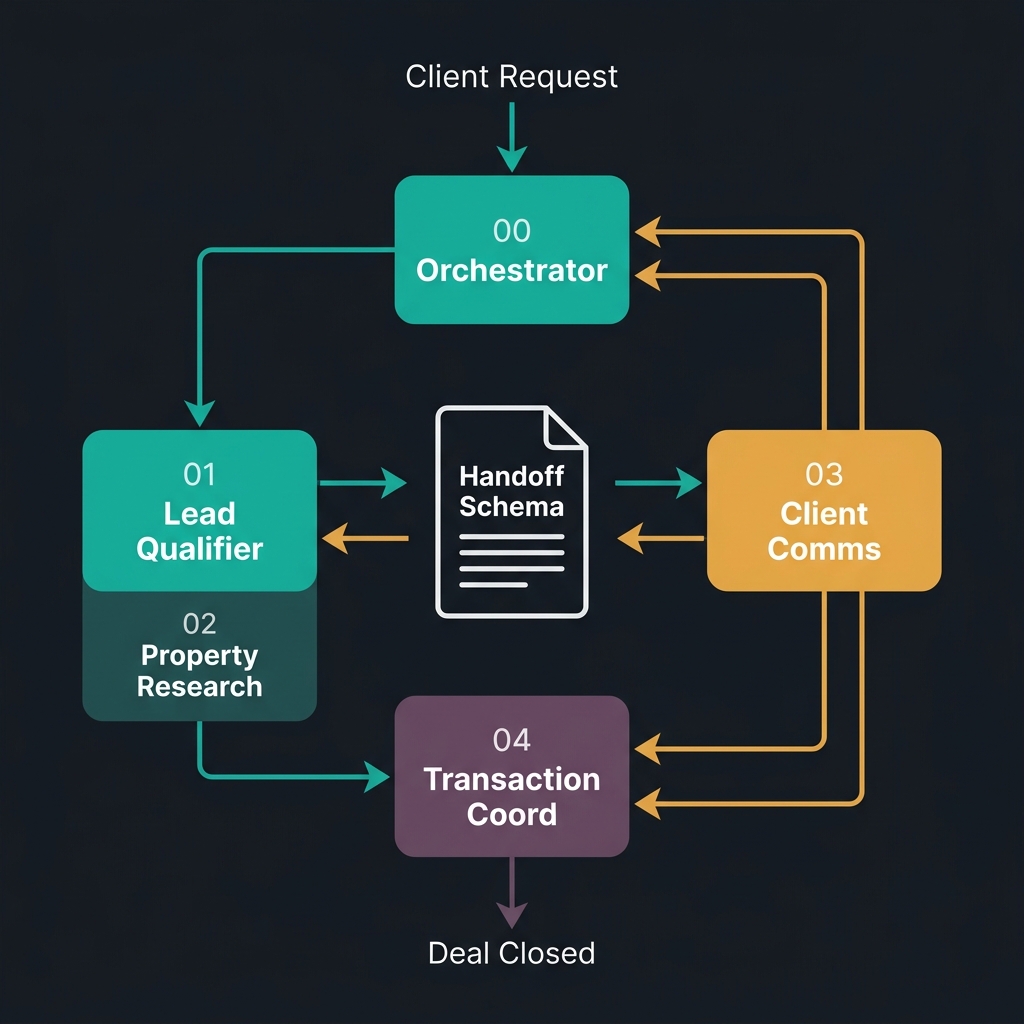
You've probably seen what happens when a deal stalls: it falls into a void. Nobody owns it. The back_to field means when something breaks, the system already knows who picks it up next and what context travels with it.

That's the question most systems never answer. A lender delays. An inspection stalls. Now what? Most flowcharts assume forward motion. This one doesn't.
The back_to field is how Diana's team handles a Tuesday when the appraiser cancels, the buyer panics in Spanish, and the listing agent needs comps by 3pm. The system already knows where each problem goes.
Bilingual by Design
You already know this matters in Austin. The question isn't whether to support Spanish; it's whether your system makes it automatic or leaves it as one more thing someone has to remember. Here, the handoff envelope carries the language flag. Every specialist knows before they start drafting.
"Great to connect — here's what's next. I've pulled three properties in your budget range near Mueller. Let's schedule a showing this Saturday."
"Mucho gusto en conectar — esto es lo que sigue. Encontré tres propiedades en su rango de presupuesto cerca de Mueller. Podemos agendar una visita este sábado."
Behind the Build
This system wasn't designed in a vacuum. It's adapted from a bilingual insurance workflow where language gaps cost real opportunities, not hypothetical ones. Claude Code + the ICM framework. Everything ships as files you can inspect.
Competitive Edge
Most entries can route a task forward. Diana's Agency OS shows what happens when the deal is no longer clean: who owns the stall, who drafts the client message, and whether the team has capacity to recover before the buyer loses trust.
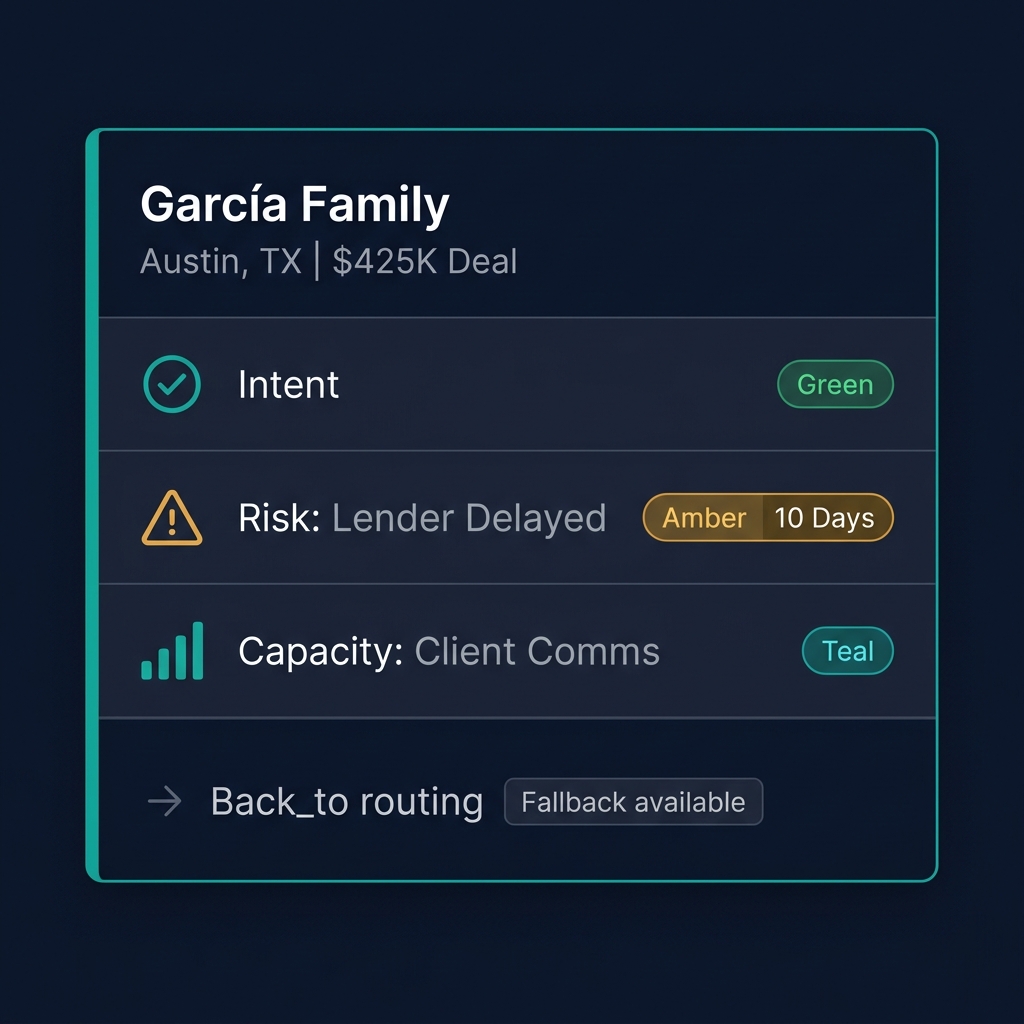
back_to field already routes fallback comps — before anyone asks.
Live Surface
Every specialist reports state. Every deal has a health score. The dashboard shows what's moving, what's stalled, and what needs a human decision — without exposing the machinery underneath.
OSMOS CRM Pattern
The page now shows the missing layer between "new inquiry" and "property analysis": capture, dedupe, score, route, and sequence. It borrows the OSMOS CRM pattern without exposing real contacts, source lists, or credentialed systems.
Redacted Deal Intelligence
Local server. Zero dependencies. Sliders in, metrics out. The public version masks address, source, and lender specifics while still showing the decision path a buyer agent would use before the first showing is scheduled.
1 masked risk rule
Average performance
Limited upside
Get Running
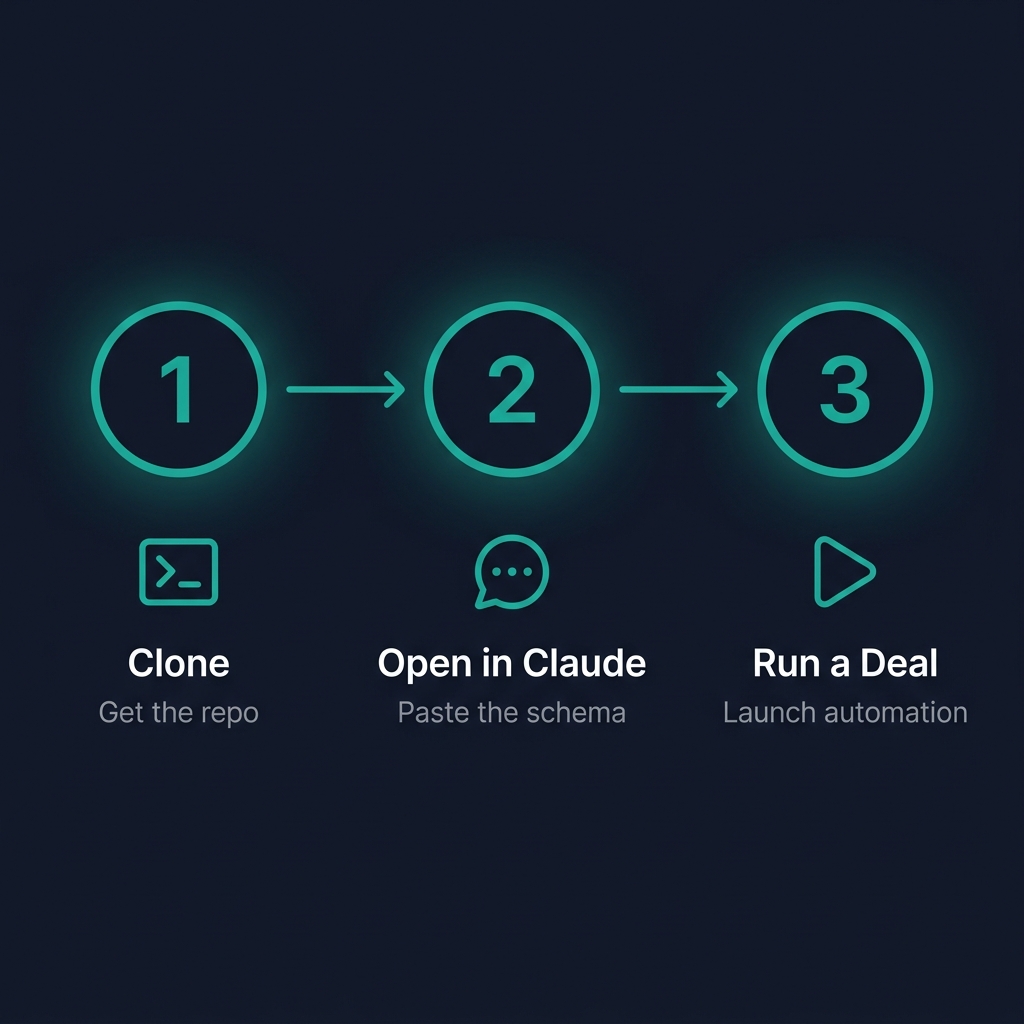
git clone https://github.com/InsightfulMinds/cold-start.git
Drag any specialist folder into a Claude Project. The system prompt is already written — no editing required before your first deal moves.
Paste a client scenario. Within two minutes, you'll see whether this actually works for your team. The handoff schema handles the routing — you focus on the result.
Proof of Work
Not a mockup. This is the handoff object when you paste a real scenario into folder 00.
Week 1-3 Pattern
The early winners did not stop at the assignment. They turned docs into sites, artifacts into apps, and folders into products. Diana's OS adds the next layer: a visible runtime surface for state, flow, connectors, and proof.
The lesson was packaging. A stranger should be able to land cold and know what to do next.
The lesson was emotional context. The system has to understand the human before the fields.
The lesson was legitimacy. Folder structure needs a product wrapper judges can use in seconds.
The next jump is state, conversion, connectors, remote view, and token-aware routing without giving away the internals.
AIOS Layer
This is the secret-safe surface area: drag in context, map folders, convert messy assets, connect tools, and keep the agent inside a workspace the human already owns.
Clone the repo. Open the orchestrator. Paste this and watch what happens:
Watch it assign the case, detect the language, qualify the lead, and route the handoff. Then inspect one stalled-deal run to see the recovery path.
Open the Repo →